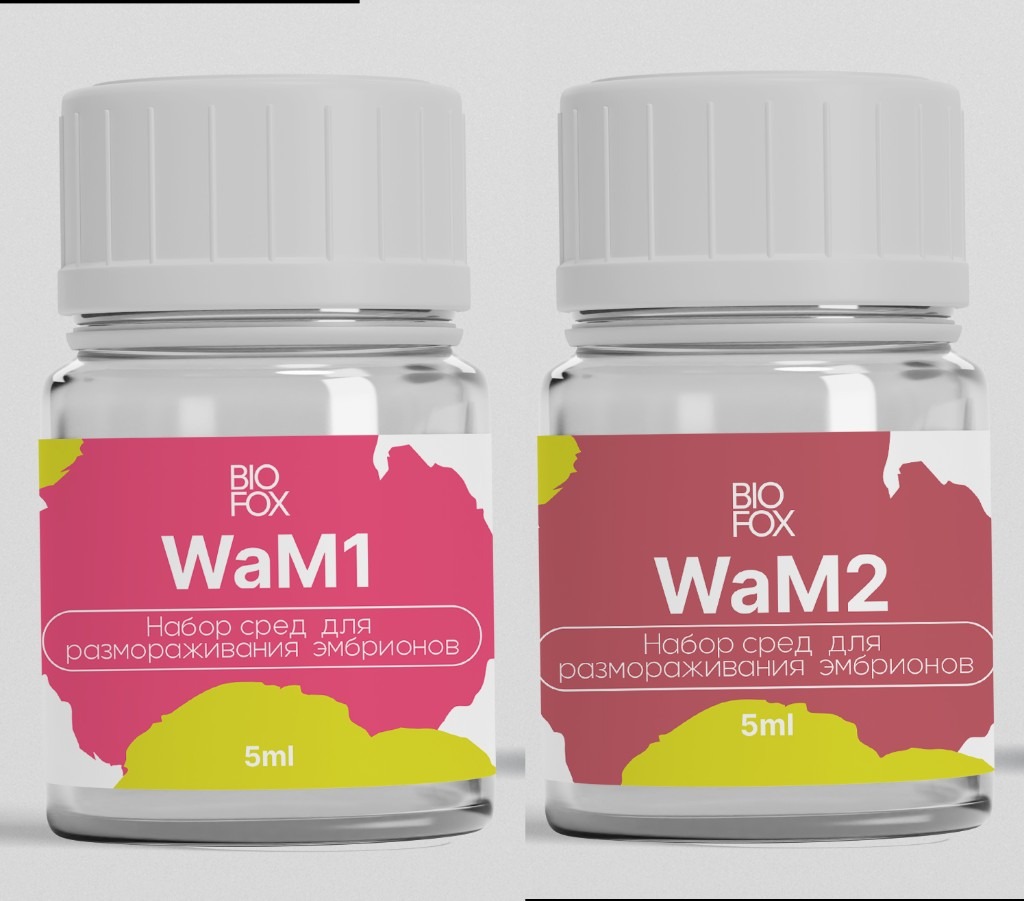
Media designed for the in vivo fertilization protocol, supporting the full path from washing to devitrification.
Production control
Every batch undergoes incoming raw material inspection and final product release testing before shipment.
Practical formats
Packaging volumes and formats are selected for real-world use in laboratories.
Equine in vivo fertilization technology
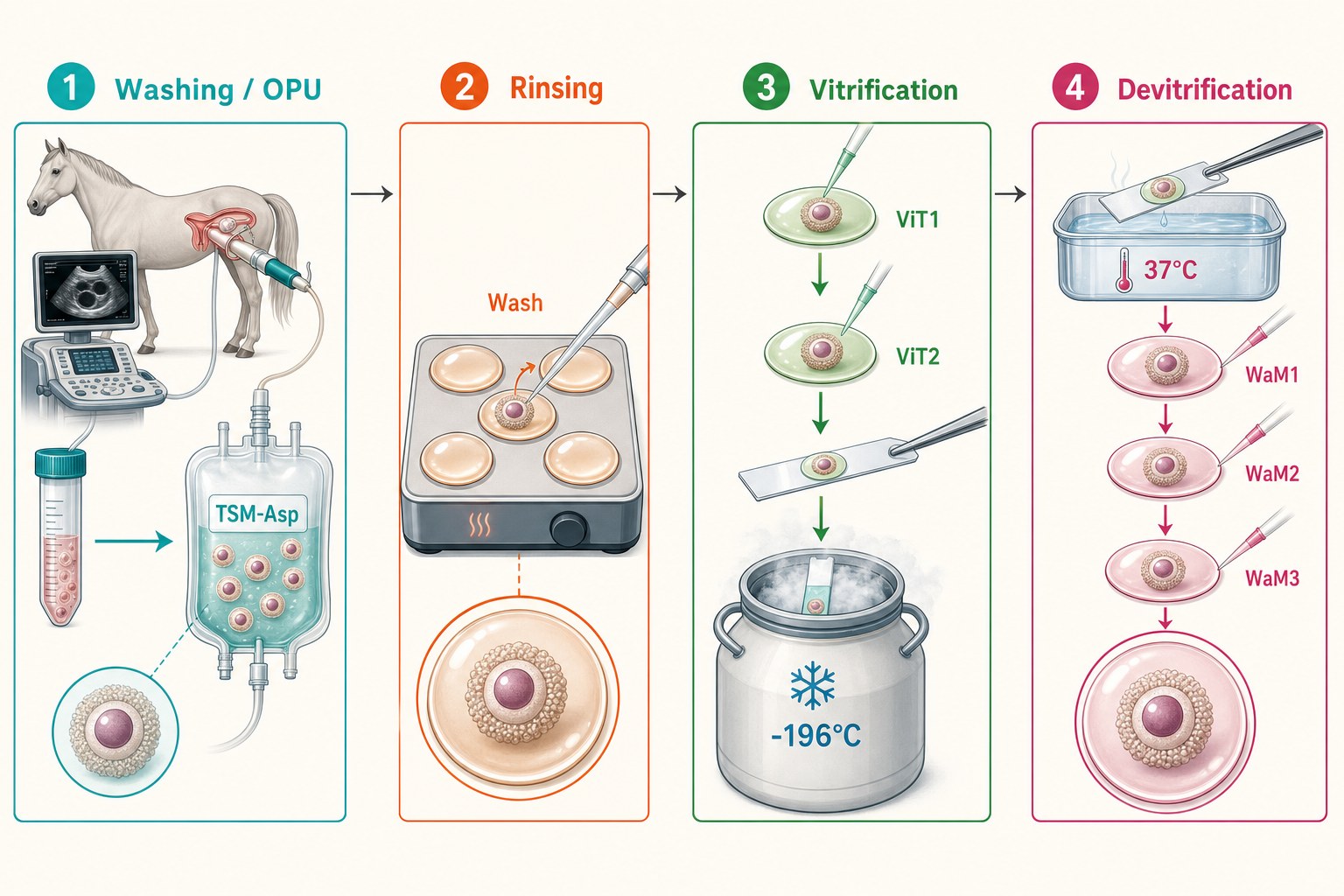
The ZOOEMBRIO protocol is built around four sequential stages. Each medium addresses a specific task at a defined point in the process.
Equine breeding increasingly relies on technologies that preserve and pass on genetics from valuable mares without the classical path of breeding, pregnancy and embryo flushing. The in vivo protocol with transvaginal oocyte aspiration (OPU) provides direct access to gametes from the ovary of a live mare — without requiring her to be bred and carry an embryo.
For breeding farms, reproductive centers and owners of performance mares, this opens practical options: collect oocytes from outstanding donors in a convenient seasonal window without interrupting competition careers or overloading the uterus with repeat pregnancies. Cells can be vitrified and stored in liquid nitrogen, while fertilization and transfer are scheduled around recipient mares and laboratory capacity. Success of the entire program starts at the first laboratory step — high-quality washing in a specialized medium. The ZOOEMBRIO line covers the full post-aspiration cycle: from washing and rinsing to vitrification and devitrification.
1
Genetics from valuable mares without pregnancy
Oocytes are collected from champions and leading broodmares without the burden of carrying offspring. The donor can keep competing, attend selection events or remain available on a limited schedule while her genetic material stays accessible for the breeding program.
2
Suitable for performance mares
Aspiration is scheduled between events or outside the competition season. The procedure takes 30–40 minutes under sedation; the mare can return to training afterward. For sport horse producers, this is a way to combine athletic careers with breeding work.
3
A solution for problem mares
When conventional reproduction fails — chronic endometritis, age-related changes, reproductive tract injuries, low fertilization rates — direct oocyte collection from the ovary opens a path to continue the line without giving up valuable genetics.
4
Flexible year-round planning
Aspiration is performed when follicles of suitable size are present, without strict dependence on a single ovulation day. Repeat procedures are possible at 2–3 week intervals. A breeding farm can distribute laboratory and recipient workload across the full season.
5
Cryopreservation and logistics
Oocytes and embryos are vitrified and stored in liquid nitrogen for transfer at a convenient time — including another region or the next season. This removes the need for tight synchronization between donor and recipient mares and simplifies logistics for large breeding programs.
6
Washing quality determines the outcome
After aspiration, oocytes are highly sensitive to medium composition, temperature and handling time. Proper washing in TSM-Asp preserves cell morphology and sets the success of the entire subsequent protocol — rinsing, vitrification and devitrification. Media for each stage must therefore work as a coordinated system.
The diagram shows the four protocol stages and ZOOEMBRIO media for each step. A detailed description of every stage is on the Technology page.
Laboratories, breeding farms and reproductive centers using ZOOEMBRIO media in equine in vivo fertilization protocols.
Partner photo
Partner 1
Reproductive laboratory
Uses the full ZOOEMBRIO media cycle — from TSM-Asp washing to WaM1/WaM2/WaM3 devitrification.
Partner photo
Partner 2
Breeding farm
Works with our media in seasonal in vivo fertilization protocols for broodmares.
Partner photo
Partner 3
ART laboratory
Applies Wash, ViT1/ViT2 and WaM1/WaM2/WaM3 in daily laboratory practice.
Testimonials
Feedback from specialists who use our media in daily practice.
«Consistent composition and predictable performance at every protocol stage — from aspiration to devitrification. Packaging formats fit our workflow.»
«TSM-Asp in infusion bags handles washing without extra transfers. Batches arrive with complete documentation.»
«ViT and WaM kits integrate well with our vitrification protocol. The ZOOEMBRIO team responds quickly to application questions.»
Our production
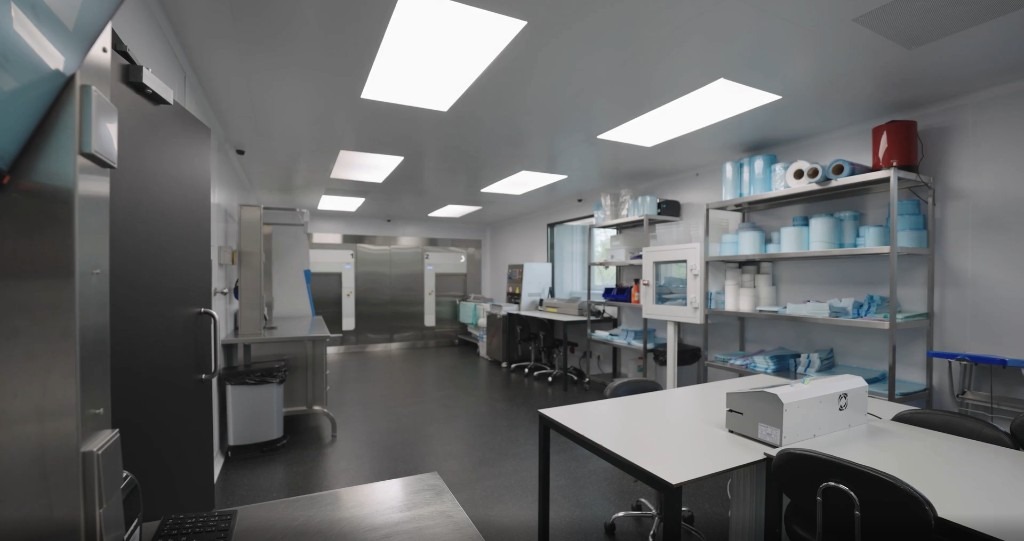
ZOOEMBRIO manufactures ART media under sterile conditions at our own facility. ISO-certified production — we control formulation, preparation and filling from raw materials to finished batch.
Sterile manufacturing
Media produced under controlled sterile conditions to ISO standards.
Proprietary formulations
Formulas developed and tested — MEA and endotoxin testing passed.
Quality control
Release testing for every batch, regular MEA and endotoxin monitoring.